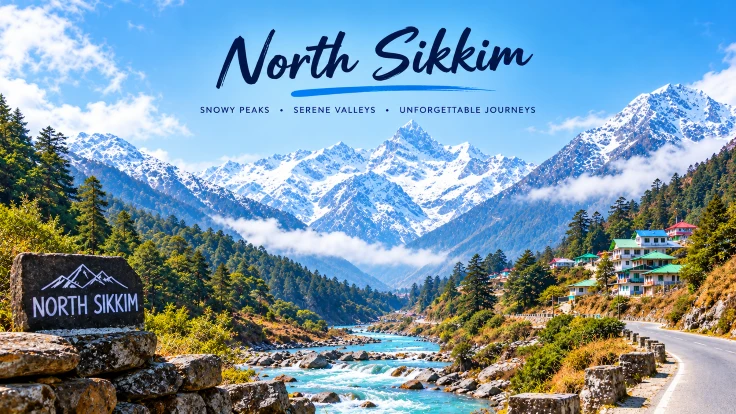
If you think Gangtok is the whole story, think again. The real magic of the Himalayas starts once you cross into north Sikkim — a world of glacial valleys, rhododendron forests, yak pastures, and mountain villages that still feel wonderfully untouched.
This region isn’t just another checkbox on a Sikkim itinerary. It’s a completely different pace of travel — quieter roads, thinner air, and views that make you stop mid-sentence. In this guide, we’re covering everything you need to plan a smooth, unforgettable trip to Lachen, Lachung, and the stunning Yumthang Valley.
If you’re still finalizing the basics of your trip, our Sikkim Travel Guide 2026: Everything You Need to Know Before You Go covers permits, best travel seasons, and region-wise planning for the whole state.
Why North Sikkim is worth a visit.
Most first timers visiting Sikkim limit their visit to only Gangtok, Pelling and perhaps Namchi.If mountain viewpoints are more your thing, our Pelling, Sikkim: The Complete Guide to West Sikkim’s Best Viewpoint Town is worth a look too. You’re in for an error if you’re a nature lover who isn’t a big nightlife fan.
North Sikkim offers:
- Spectacular high elevation landscapes such as snow-capped peaks and alpine meadows
- Two pretty base villages, Lachen and Lachung, which are individually distinct.
- Access to the Yumthang Valley, popularly known as the ‘Valley of Flowers of Sikkim’
- Reduced number of visitors than other more commercial areas of the state.
- An authentic look into the mountain life of Lepcha and Bhutia
The rest of Sikkim is in a different ball game than this area, as it has to go through protected and ecologically sensitive areas and consequently, is largely unspoiled.
The most basic way to reach North Sikkim.
Before you wander off into the landscape, let’s clear up the logistics.
Permits You’ll Need
Foreign and domestic tourists require Inner Line Permit (ILP) to enter Lachen and Lachung as North Sikkim is adjacent to Tibet. There are a number of points to keep in mind:
- As a rule, the permit is organized by your registered travel agent or homestay.
- Photos (passport size) of your ID proof and photograph will be required
- Permits are usually issued for a set period of time, so make sure that you have dates to fit that time frame.
- It is NOT permitted to travel independently without a registered operator in this area.
Getting to the Region By car
The gateway of most trips to north Sikkim is Gangtok.
- You can fly to Bagdogra or you can take a train to New Jalpaiguri (NJP)
- Then head for the town of Gangtok (4 – 5 hours).
- Hire shared or private vehicle from gangtok to Lachen/Lachung 6-7 hours depending on the road condition (6 km away).
This is a hilly road, and during monsoon, the road is winding and sometimes rough, so plan ahead for extra time.
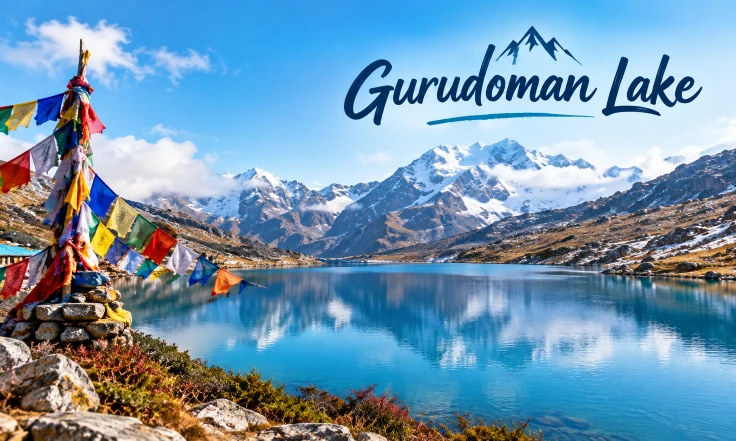
Gateway to Gurudoman Lake, Lachen is a charming village.
Lachen is a tiny little village in the Himalayas, primarily a resting place for those who want to go even higher into the north – but don’t rush through it!
It is quite wonderful how Lachen has become so special.
- Wooden homes nestled in pine forests with sloping hills.
- A tightly-knit Lachenpa community that has its own local governance system known as “Dzumsa”
- Cool, crisp mountain air even on the hottest summer days!Even in the hottest summer days, cool, crisp mountain air!
- The starting point of the mesmerising Gurudongmar Lake
The Highlight is Gurudongmar Lake.
Sitting at more than 17,000 feet, Gurudongmar lake is among the world’s highest lakes and revered by the Buddhists, Sikhs and the Hindus.
Here are a couple of tips:
- Extreme elevation will require acclimatisation in Lachen for at least one night before going up
- Clouds blanket the sky in the evenings and mornings are best to view,
- Be aware of freezing temperatures even in summer — dress appropriately
- Oxygen levels are low; anyone with heart or respiratory diseases should check with their physician first.
Those who stood at the edge of that frozen, mirror still lake, in the midst of only sky and snow, will never forget it after they have left the trip.
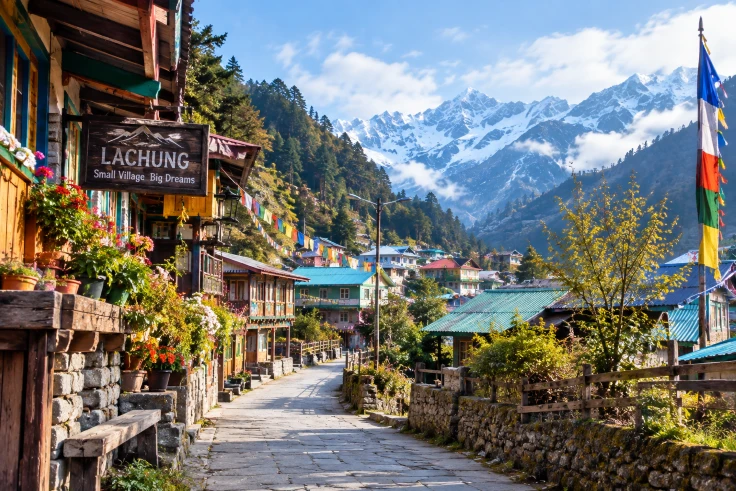
Lachung: The Prettier, Cozier Cousin
Lachung is like a postcard, but rugged and remote. The village is located at the junction of Lachung and Lachen rivers, and is the starting point to visit the Yumthang Valley.
Highlights of Lachung
- A traditional visit of the monastery is an hour’s quiet exploration of the Lachung Monastery which was constructed in the 19th century.
- Over the hillsides the apple orchards and terraced farms dot the landscape.
- Waterfalls on the way, such as Bichom and Amitabh Bachchan Falls.
- With the relaxed atmosphere of a village and homestays by friendly local families.
Where to Stay
Lachung offers more lodging than Lachen, including simple guesthouses to somewhat more upscale resorts. It is good to book ahead in time, particularly at the busier times of year (March-June and October-December) as places can fill up quickly.
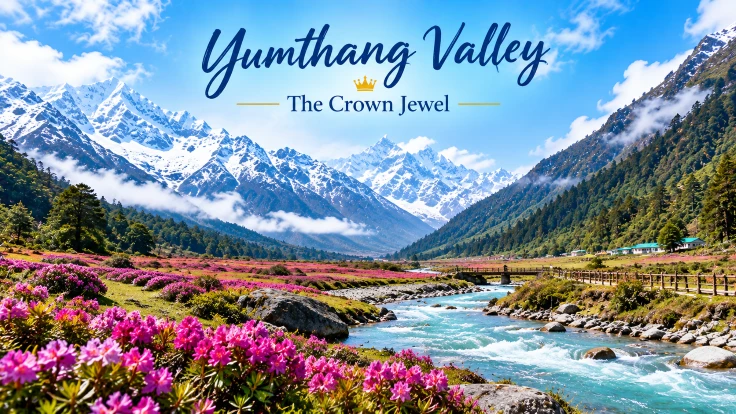
Yumthang Valley: The Crown Jewel
This is the area of the journey that most visitors go to see and it really doesn’t disappoint!
What to Expect
Yumthang Valley, popularly known as the “Valley of Flowers,” is utterly a different place in its different seasons.
- Spring (April-June): Pink, red and white rhododendrons and primulas flower throughout the valley floor.
- Summer: Meadows with lush green grass, yaks grazing and streams gently flowing.Summer: Days are soft with gentle streams and yaks grazing in lush green meadows.
- Winter (December – February): All the valley is covered with snow and it becomes an entirely other, almost other-worldly environment.
Visit the Yumthang Valley and explore the region’s activities and attractions.
- Hike along the river Lachung Chu, which runs through the valley
- Head up to the hot springs in the valley, thought to have healing powers
- Take a picture of the yak herds in front of the mountain.
- Continue (if permitted) to Zero Point, a higher altitude area near the Indo-China border with snowy views of the panorama.
A Quick Tip
Layer your clothing. The weather is warm and enjoyable in the sun, but as soon as the clouds roll in it’s cold as ice.
The best time to visit North Sikkim is the summer and autumn seasons.
When you arrange things right it can make a huge difference to the actual sightings you’ll have.
Season | Months | Highlights |
Spring | March-May | Rhododendron blooms and pleasant weather |
Spring | September-October | Green valleys, occasional disruptions of monsoon during the spring |
Late Fall | September-November | Clear Blue Skies, crisp mountain views. |
Fall | September-November | Cool weather, colorful foliage, and snow on the ground. |
If flowers are your top priority, then consider April-June. For snow, December or January, but remember there are times when roads are closed following heavy snow.
Sample Itinerary for 5 days in North Sikkim
This is a basic format that many travellers use:
- Day 1: Reach Gangtok and take rest and acclimatize.
- Day 2: Lachen – drive to Lachen, visit the village and stay overnight.
- Day 3: Early morning visit to Gurudongmar Lake, drive to Lachung.
- Day 4: Explore Yumthang Valley and Zero Point, back to Lachung.
- Day 5: Drive back to Gangtok and onward journey.
This is a relatively fast pace to maintain for a good altitude acclimatization, which is more important than many are aware of.
What is the cost of travelling to North Sikkim?
In northern Sikkim, budgeting is largely about what package you choose to book as it is not possible to travel here on an independent basis. On a 4-5 day trek to Lachen, Lachung, Gurudongmar Lake and Yumthang Valley, the cost of trekking is around ₹10,000-18,000 per person, depending on group size, vehicle used and season. This usually encompasses shared transport, permit, simple homestay or guesthouse accommodation and meals. Solo travellers or individuals looking for private vehicle rental typically end up paying more as there’s fewer people to cover the cost. Demand in peak season (April-June and October-December) can lead to higher prices, while shoulder months may offer lower prices. Some homestays charge for extra bottled water, hot water buckets, or extra blankets, so it’s best to save some money for your personal needs.
The basic packing list for North Sikkim.
Packaging properly is no option at high altitude, since the situation evolves rapidly.
- Layers, and a windproof jacket.
- Rough and tough closed shoes for walking.
- Sunglasses and sunscreen (higher altitude equals higher exposure to UV rays)
- Simply a basic medical kit, including treatment for altitude sickness, if given.
- Power bank as electricity may not be available in the remote villages.
- ATM is rare outside Gangtok, so cash is the only option.
Responsible Travel in North Sikkim
This area is ecologically sensitive and tourism development has been rapid in the past few years. There are a few simple things that can make a big difference:
- Take your rubbish, particularly plastic, home with you.
- Do not use loud music or noisy activities around sacred places such as Gurudongmar lake.
- Rely on local homestays and guides, not just larger operations
- Follow permit requirements and remain in designated areas
Responsible travel here is not only good practice – it is essential to helping to ensure that these valleys remain untouched as they are today.
FAQs
If you acclimatize first, and are reasonably healthy, it is generally safe to use. Extremes of altitude create hazards for those with respiratory or cardiac problems; consult a physician before attempting this.
No, as Inner Line Permit is required and due to the proximity of the region to the international border, it is mandatory to get it through a registered agent/or operator.
It is a loosely connected affair. However, only some local postpaid networks operate in Lachung and even less so in Lachen. Let family back home know you won’t be able to be reached for a couple of days.
Most of the homes stay and restaurants offer plain home cooking — rice, dal, seasonal vegetables and the Tibetan type dishes like thukpa and momos. There are not many options available as compared to Gangtok, so don’t expect a huge menu.
Roads are narrow, tortuous and may become blocked by landslips or flooding, particularly in monsoon months (July-September). Be sure to have an extra buffer day in your trip in case of delays.
Final Thoughts
North Sikkim is not a place that you rush through — it’s a place you take time to get to know. All of it is rewarding to the travelers who take the time to observe the things that they find themselves in.
In case Sikkim is your destination, do not limit yourself to Gangtok. Keep climbing north and discover a part of the Himalayas that far less people are able to experience: Lachen Valley, Lachung Valley and Yumthang Valley.