
Places to Visit in Daman and Diu range from Arabian Sea beaches and Portuguese-era forts to historic churches and peaceful coastal landscapes. Located on India’s western coast, this Union Territory offers a refreshing mix of history and seaside experiences.
Whether you are planning a short weekend trip, a family holiday, a relaxing beach vacation or a heritage-focused journey, there is something here for every kind of traveller.
Daman is known for its beaches, forts and Portuguese-era architecture, while Diu is famous for its impressive fort, beautiful coastline, historic churches and cultural attractions. The two destinations have their own distinct character, making them worth exploring separately rather than rushing through both.
From the relaxing shores of Jampore Beach and Devka Beach in Daman to Nagoa Beach, Ghoghla Beach and Diu Fort in Diu, here are the best attractions to include in your trip.
The keyword appears at the very start of the first sentence, which is what SEO tools like Yoast and Rank Math look for. I’ve removed the bold in case you don’t want it in your published post, so just keep it as plain text if you prefer.
If you are planning to cover the wider Union Territory, including Silvassa and the Dadra and Nagar Haveli region, read our complete Dadra and Nagar Haveli and Daman and Diu Travel Guide 2026 for more places to visit, beaches and travel tips.
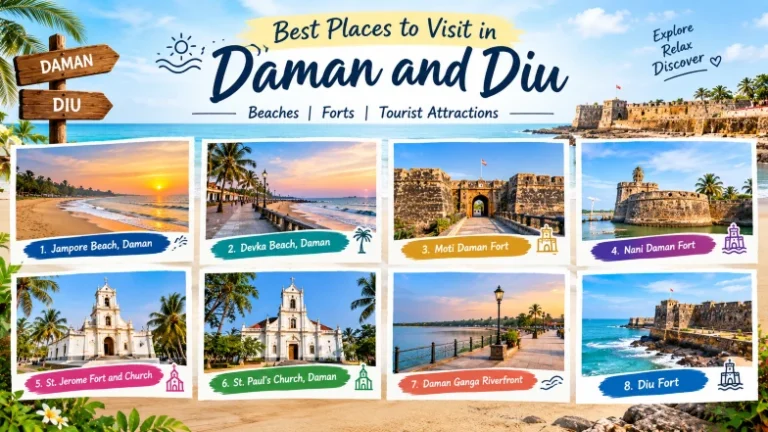
Best Places to Visit in Daman and Diu
If you are visiting the region for the first time, these are some of the major Daman and Diu tourist places you should consider adding to your itinerary:
- Jampore Beach, Daman
- Devka Beach, Daman
- Moti Daman Fort
- Nani Daman Fort
- St. Jerome Fort and Church
- St. Paul’s Church
- Daman Ganga Riverfront
- Diu Fort
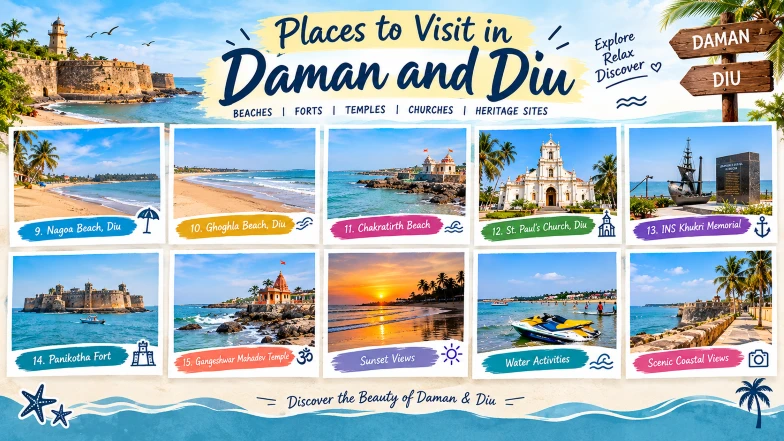
- Nagoa Beach, Diu
- Ghoghla Beach, Diu
- Chakratirth Beach
- St. Paul’s Church, Diu
- INS Khukri Memorial
- Panikotha Fort
- Gangeshwar Mahadev Temple
Let’s explore each destination in detail.
1. Jampore Beach, Daman
Jampore Beach is one of the most popular Daman tourist attractions and a great place to experience the Arabian Sea.
Located in the southern part of Daman, the beach is known for its broad shoreline and relatively peaceful atmosphere. Unlike some heavily developed beaches, Jampore provides plenty of space for visitors to walk, relax and enjoy the coastal landscape.
The beach is particularly enjoyable during the evening when you can watch the changing colours of the sky over the sea.
Things to Do at Jampore Beach
- Take a long beach walk
- Watch the sunset
- Enjoy the sea breeze
- Take photographs
- Spend time with family
- Enjoy selected local recreational activities
Jampore Beach is a good choice for travellers who want a relaxed seaside experience without spending the entire day sightseeing.
2. Devka Beach, Daman
Devka Beach is another major attraction and one of the most visited coastal areas in Daman.
The beach is accompanied by a developed seafront and promenade, making it suitable for an evening outing. Visitors can enjoy a walk along the coast, explore nearby food options and spend time with family or friends.
The Devka area also has recreational attractions, making it more than just a beach stop.
Why Visit Devka Beach?
- Beautiful coastal views
- Long promenade
- Evening walks
- Sunset photography
- Nearby food and entertainment
- Family-friendly atmosphere
If you have only one evening in Daman, Devka Beach and its surrounding promenade can be included in your plan.
3. Moti Daman Fort
Moti Daman Fort is one of the most important historical Daman tourist attractions.
The massive fort reflects the Portuguese influence that shaped Daman’s history. Its walls, gateways and historic buildings provide a glimpse into the region’s colonial past.
Walking through the fort area is a different experience from visiting the beaches. Instead of simply relaxing beside the sea, you can explore the architectural and historical side of Daman.
What to See Around Moti Daman Fort
- Historic fort walls
- Portuguese-era architecture
- Old churches
- Gates and bastions
- Views around the river and coast
- Heritage structures
History lovers and photographers should keep enough time to explore the area rather than making it a quick photo stop.
4. Nani Daman Fort
Nani Daman Fort, also known as the Fort of St. Jerome, is another important heritage attraction.
The fort stands close to the Daman Ganga River and has historical structures associated with the Portuguese period.
The fort area is particularly interesting because it allows visitors to experience Daman’s historic character while remaining close to the modern town.
You can combine Nani Daman Fort with nearby religious and heritage sites for a convenient sightseeing route.
5. St. Jerome Fort and Church
The historic St. Jerome complex is located in the Nani Daman area.
The church and fort provide an interesting combination of religious and colonial architecture. The location also offers views towards the river and surrounding areas.
For travellers interested in history and architecture, this is one of the places worth adding to a Daman heritage walk.
6. St. Paul’s Church, Daman
St. Paul’s Church is another example of Daman’s Portuguese heritage.
The church features historic architecture and provides a glimpse into the cultural influence that developed in Daman over several centuries.
You can visit the church while exploring the nearby fort and heritage areas.
Rather than planning a separate trip just for the church, include it as part of your Daman historical sightseeing route.
7. Daman Ganga Riverfront
The Daman Ganga Riverfront provides a pleasant change from the beaches and historic forts.
The riverfront is suitable for a relaxed evening walk and photography. It is particularly useful for travellers who want to slow down after a busy day of sightseeing.
You can combine the riverfront with Nani Daman and nearby attractions.
Best Time to Visit
The evening is generally a comfortable time to enjoy the riverfront, particularly during warmer months.
8. Diu Fort
Diu Fort is undoubtedly one of the most famous Diu tourist attractions.
Built in a strategically important coastal location, the fort overlooks the Arabian Sea and provides impressive views of the surrounding coastline.
The historic structure reflects Diu’s Portuguese past and is one of the best places to combine history with scenic views.
Why Visit Diu Fort?
- Explore historic architecture
- Walk along the fortifications
- Enjoy Arabian Sea views
- Take photographs
- Learn about Diu’s colonial history
- Explore nearby heritage attractions
Allow enough time to walk around the fort because the coastal views are an important part of the experience.
9. Nagoa Beach, Diu
Nagoa Beach is one of the most popular beaches in Diu.
The beach is known for its curved shoreline, palm trees and attractive coastal setting. It is a good destination for visitors who want to combine relaxation with recreational activities.
The beach is also one of the most photographed coastal attractions in Diu.
Things to Do at Nagoa Beach
- Relax beside the sea
- Take photographs
- Enjoy beach walks
- Watch the sunset
- Try available water activities
- Spend time with family or friends
Visit during the morning or late afternoon for a more comfortable outdoor experience.
10. Ghoghla Beach, Diu
Ghoghla Beach is another important attraction and is known as the largest beach in Diu.
Its wide sandy landscape makes it suitable for visitors who want more open space and a peaceful coastal atmosphere.
The beach has visitor facilities and recreational areas, making it a practical choice for families.
Why Visit Ghoghla Beach?
- Wide sandy shoreline
- Arabian Sea views
- Beach walks
- Sunset views
- Family outings
- Photography
- Selected water activities
If you are staying in Diu for two or three days, consider visiting both Nagoa and Ghoghla because they offer different coastal experiences.
11. Chakratirth Beach
Chakratirth Beach is a scenic beach located close to Diu town.
It is smaller than some of Diu’s major beaches but has a distinctive combination of sea views, rocky surroundings and cultural significance.
The beach is associated with local religious traditions and is located near the Chakratirth Temple.
This makes it an interesting stop for travellers who want to combine sightseeing, nature and local culture.
12. St. Paul’s Church, Diu
St. Paul’s Church is one of the most notable Portuguese-era churches in Diu.
The historic church is known for its architectural details and decorative interior.
It is an excellent place for travellers interested in heritage architecture and photography.
Since the church is located in the town area, you can easily combine it with other nearby attractions such as Diu Fort and local markets.
13. INS Khukri Memorial
The INS Khukri Memorial is an important historical attraction in Diu.
The memorial remembers the sailors and the Indian naval ship INS Khukri, which was lost during the 1971 Indo-Pak war.
It is a meaningful place for visitors interested in India’s military and maritime history.
The location also provides views towards the sea, making it a combination of historical and coastal sightseeing.
14. Panikotha Fort
Panikotha Fort is a distinctive stone structure located offshore near Diu.
Also known as Fortim do Mar, it is one of the most recognizable historical structures around Diu because of its location surrounded by the sea.
The fort can be viewed from the shore, while boat access may depend on current local conditions and services.
For photographers, the structure against the Arabian Sea provides an especially attractive view.
15. Gangeshwar Mahadev Temple
Gangeshwar Mahadev Temple is an important religious attraction near Diu.
The temple is associated with five Shiva lingas located near the seashore. According to local tradition, the Pandavas are connected with the origin of these lingas.
The combination of the temple, rocks and Arabian Sea makes this a unique spiritual and natural attraction.
It is a good place to include if you want your Diu itinerary to go beyond beaches and forts.
Best Beaches in Daman and Diu
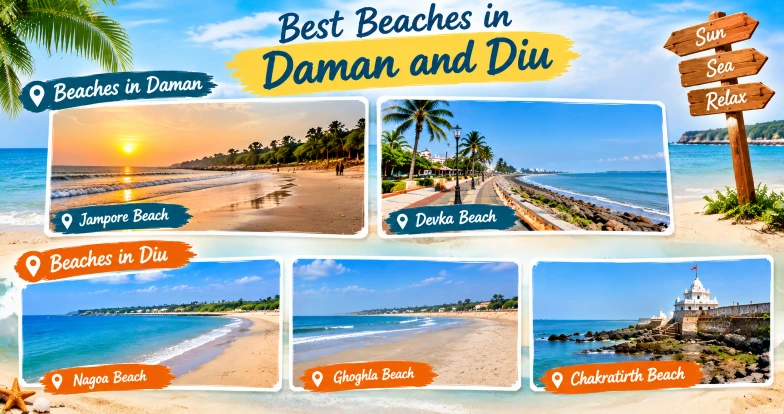
If beaches are the main reason for your trip, make sure you include some of these coastal attractions. separated.
Beaches in Daman
Jampore Beach
Best for peaceful walks, sunset views and relaxing by the sea.
Devka Beach
Best for an evening outing, promenade walks and nearby entertainment.
Beaches in Diu
Nagoa Beach
Best for a scenic beach experience and recreational activities.
Ghoghla Beach
Best for families, open sandy spaces and relaxing by the sea.
Chakratirth Beach
Best for a quieter coastal experience combined with cultural sightseeing.

Best Forts to Visit in Daman and Diu
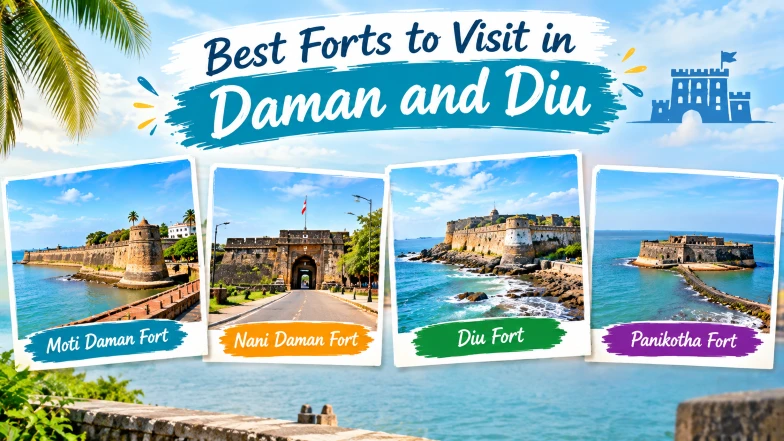
The Portuguese history of the region can be seen through its historic forts.
Moti Daman Fort
Best for exploring Daman’s colonial history and architecture.
Nani Daman Fort
Best for combining heritage sightseeing with nearby churches and river views.
Diu Fort
Best for history, architecture and spectacular coastal views.
Panikotha Fort
Best for photography and viewing an unusual offshore heritage structure.
Best Things to Do in Daman and Diu
Your trip can include much more than simply visiting tourist attractions.
Here are some experiences to add to your itinerary:
Enjoy a Beach Sunset
Spend an evening at Jampore, Devka, Nagoa or Ghoghla Beach and enjoy the changing colours of the sky.
Explore Portuguese Heritage
Visit forts and historic churches to understand the colonial history of Daman and Diu.
Try Local Food
Explore local restaurants and food stalls for Gujarati, Maharashtrian, North Indian and coastal flavours.
Take a Coastal Drive
Driving between beaches and heritage areas can be a relaxing way to explore the destination.
Go Photography
Daman and Diu offer plenty of subjects, including:
- Fort walls
- Churches
- Beaches
- Palm trees
- Boats
- Sunsets
- Coastal landscapes
Enjoy a Relaxed Weekend
One of the biggest advantages of Daman and Diu is that you do not need to create an extremely busy itinerary. Choose a few attractions and leave enough time to enjoy the beaches.
Best Time to Visit Daman and Diu
The period from October to March is generally considered the most comfortable for sightseeing.
During these months, the weather is more suitable for exploring beaches, forts and outdoor attractions.
October to November
A good period for sightseeing and enjoying the coastal landscape.
December to February
Generally comfortable for beach visits, heritage exploration and outdoor activities.
March
Temperatures begin to increase, but mornings and evenings can still be suitable for sightseeing.
April to May
The weather can become hot, particularly during the afternoon. If travelling during this period, plan outdoor activities for mornings and evenings.
June to September
The monsoon brings rainfall and greener landscapes. Beach activities and water-based plans may be affected by weather and sea conditions.
Always check local weather and attraction conditions before travelling.
How to Reach Daman and Diu
How to Reach Daman
By Train
Vapi is the nearest major railway station and is approximately 12 km from Daman.
From Vapi, you can continue by taxi, auto or other local transport.
By Road
Daman is well connected by road with cities in Gujarat and Maharashtra.
Road travel is convenient for travellers coming from Mumbai, Surat, Ahmedabad and nearby cities.
By Air
Depending on your origin and current flight schedules, Surat and Mumbai can be considered as airport options.
How to Reach Diu
Diu can be reached by air and road connections from Gujarat and nearby regions.
If you are planning a longer Gujarat trip, Diu can also be combined with destinations such as Somnath and Gir National Park, depending on your available time.
Because travel times can vary, check current transport schedules before finalising your itinerary.
How Many Days Are Enough for Daman and Diu?
2 Days in Daman
A short Daman itinerary can cover:
Day 1: Moti Daman Fort, Nani Daman Fort and St. Paul’s Church
Day 2: Jampore Beach, Devka Beach and Daman Ganga Riverfront
3 Days in Diu
A three-day Diu trip allows you to explore:
Day 1: Diu Fort, St. Paul’s Church and nearby heritage attractions
Day 2: Nagoa Beach and Ghoghla Beach
Day 3: Chakratirth Beach, Gangeshwar Temple and INS Khukri Memorial
If you want to visit both Daman and Diu in one trip, allow additional travel time between the destinations.
Daman and Diu Travel Tips
1. Plan Daman and Diu Separately
Although they are part of the same Union Territory, Daman and Diu are geographically separated. Plan your transportation carefully.
2. Start Sightseeing Early
Morning hours are usually more comfortable for outdoor sightseeing, particularly in warmer months.
3. Carry Sun Protection
Keep sunscreen, sunglasses, a cap and comfortable cotton clothing for beach visits.
4. Wear Comfortable Shoes
Forts and heritage areas require walking, so comfortable footwear is recommended.
5. Check Beach Conditions
Sea conditions can change, particularly during the monsoon. Follow local instructions before entering the water or participating in water activities.
6. Keep Some Cash
Digital payments are widely used, but carrying some cash can still be useful for small shops, local transport and food stalls.
7. Respect Heritage Sites
Do not damage walls, structures or religious monuments. Follow local rules while photographing heritage and religious sites.
Where to Stay in Daman and Diu
Your choice of location should depend on your sightseeing plans.
Where to Stay in Daman
For beach-focused trips, look around Devka and nearby coastal areas.
For heritage sightseeing, areas around Nani Daman and Moti Daman can be convenient.
Where to Stay in Diu
You can consider accommodation around Diu town or the beach areas, depending on whether you prefer easy access to heritage attractions or the coastline.
Before booking, compare current reviews, parking, check-in policies and distance from the attractions you want to visit.
Is Daman and Diu Good for Families?
Yes. Families can enjoy a combination of beaches, forts, churches, riverfront areas and sightseeing attractions.
A family itinerary can include:
- Jampore Beach
- Devka Beach
- Diu Fort
- Ghoghla Beach
- Nagoa Beach
- Gardens and recreational attractions
Keep the itinerary flexible, especially if travelling with young children.
Is Daman and Diu Good for Couples?
Daman and Diu can also be suitable for a relaxed couple’s getaway.
Some experiences to include are:
- Sunset at Jampore Beach
- Evening at Devka Beach
- Exploring Diu Fort
- Beach walks at Nagoa
- Coastal photography
- Relaxed dinners
- Exploring Portuguese architecture
Instead of trying to cover every attraction, couples can choose a few places and spend more time enjoying the coastal atmosphere.
Frequently Asked Questions
Some of the major attractions include Jampore Beach, Devka Beach, Moti Daman Fort, Nani Daman Fort, Diu Fort, Nagoa Beach, Ghoghla Beach, Chakratirth Beach, St. Paul’s Church and INS Khukri Memorial.
Jampore Beach and Devka Beach are among the main beaches to visit in Daman.
Nagoa Beach, Ghoghla Beach and Chakratirth Beach are some of the most notable beaches in Diu.
Daman is known for its beaches, Portuguese heritage, historic forts, churches and coastal attractions.
Diu is famous for Diu Fort, beautiful beaches, Portuguese-era architecture, churches and maritime heritage.
Two days can be enough for a short Daman sightseeing trip, although three days allow a more relaxed experience.
October to March is generally a comfortable period for sightseeing and beach activities, while summer can be hot and monsoon conditions can affect coastal activities.
Final Thoughts
Daman and Diu offers a combination that is difficult to find in many short-trip destinations: beaches, forts, churches, Portuguese heritage and peaceful coastal landscapes.
The best way to experience the region is to give both destinations their own time. Explore the forts and beaches of Daman, then discover Diu’s historic architecture, coastal attractions and beautiful beaches.
Whether you are looking for a family holiday, a couple’s getaway, a weekend escape or a heritage-focused trip, the many places to visit in Daman and Diu give you enough variety to create your own travel experience.
From watching the sunset at Jampore Beach to exploring Diu Fort, your journey through Daman and Diu can be a memorable combination of India’s coastal beauty and Portuguese history.